Our History, Our Growing Legacy

The vision, tenacity, and courage that are interwoven into the history of the Unitarian Church of Baton Rouge are legacies of the individuals who relentlessly pursued their dream of establishing a liberal religious community in the city of Baton Rouge in the early 1950s. From its beginnings as a small nomadic group in search of a regular meeting place, the Unitarian Church of Baton Rouge has grown to a membership of over 400, and occupies a physical plant that includes the first permanent church and a new and larger sanctuary and other facilities. However, it was this core of would-be Unitarians and the hardships and joys of their early beginnings that laid the foundation for the present vibrant and thriving Baton Rouge Unitarian Church.

The first official meeting of individuals interested in establishing a Unitarian fellowship in Baton Rouge was held in the fall of 1951 in a room of the Heidelberg Hotel (later known as the Capitol House). The Rev. Albert D’Orlando, minister of the First Unitarian Church in New Orleans would serve as mentor and guide and provide part-time ministerial services for seven years of the group’s formative development.

Through its early years, meetings were held in a number of locations. The first meeting place was a room in the basement of the Old State Capitol. The group subsequently met at the YWCA, the Baton Rouge Trade School, the Liberal Synagogue, and wherever a room could be found in local schools or churches. One program chairman during these unsettled years remembered that his hardest job was not finding programs, but finding members to inform them where the next meeting would be held.

It became apparent early on that the group needed a place of its own in which to meet. Through a variety of money-raising activities the needed funds were accumulated to purchase a house and lot, which became the Fellowship’s first home. Unexpectedly, the property stood in the path of the city’s major interstate artery. This proved to be fortuitous, since the sale of the property provided the funds for the group to begin a search for land on which to build a permanent home. Through the early 1960s, while searching for property and planning and designing a permanent building, meetings and religious education classes were held in a house on Government Street that was only bearable because it was temporary.

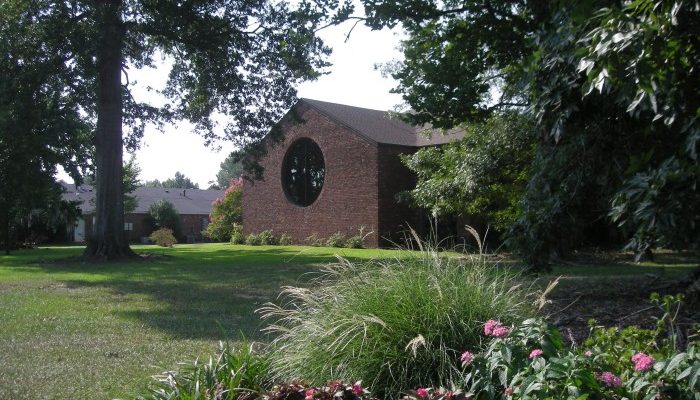
In 1965, the building that became the permanent home of the Unitarian Fellowship of Baton Rouge was dedicated on the present three-acre site. Among those honored were The Reverend Albert D’Orlando, whose place in the church’s history is signified by an oak tree planted on the church grounds in his honor, and the Reverend Anita Truman Pickett, a retired Unitarian minister, who figures significantly in the church’s early history. The dedication marked a new era for the Baton Rouge Unitarian Fellowship and the beginning of Unitarian Universalism and religious liberalism as firmly established forces in the Baton Rouge religious community.

Buoyed by a new confidence and a clear vision of its future, the Fellowship continued to grow and become financially and socially secure. By 1966, the membership reached a level required for the Minister-at-Large program, and, in 1967, voted to apply to the program with the goal of increasing membership and securing a financial base that could support a full-time minister. With the assistance of The Reverend Russell Lockwood, Southwest Regional Unitarian Universalist Coordinator, the Reverend Arthur Olsen arrived in January 1969 to serve as Minister-at-Large for twelve months. By the end of his tenure, with the membership now numbering 118 and with a comfortable level of pledges, the Fellowship voted to launch a search for a minister.

In November 1969, The Reverend Edgar T. (Toby) Van Buren became the Fellowship’s first minister. His six-year ministry, which ended in 1975, was marked by an increase in the Fellowship’s finances and membership and an expansion of programs. In August 1976, The Reverend Glenn Turner became the second minister, remaining until January 1, 1982. In the course of his tenure, the membership made substantial strides in expanding support for the church through pledges, in planning for future enlargement of facilities, and in building a strong Unitarian Universalist congregation in Baton Rouge. The period was also characterized by a change in status from fellowship to church and a maturing in the expression of religious beliefs. A more effective organizational structure evolved through revision of the Church’s bylaws.

In January 1983, The Reverend Doctor Steve Crump became the third minister and is currently Senior Minister. From the outset of his ministry, the church took on a new vibrancy and entered a new era of liberal religion in the Baton Rouge community. Continuing a push for expansion of facilities begun by the congregation years earlier, a building steering committee was appointed in 1984, the mortgage was retired in 1985, and a capital campaign was launched the same year. With the completion of the new sanctuary in 1988, the Church experienced a new burst of growth and change: an increase in membership; a stronger religious education program for children and youth with staffed leadership; a staff musical director and a large and well-trained choir; greater involvement with the community; and a sound financial base. As a result of The Reverend Dr. Crump’s initiatives and personal involvements, a closer identification with the larger Unitarian Universalist movement has developed. His emphasis on more liturgically-centered Sunday worship services and on spiritual growth and spirituality have been important in the further maturing of the Church as a religious community. Involvement in pastoral care and community outreach have also been hallmarks of his ministry.

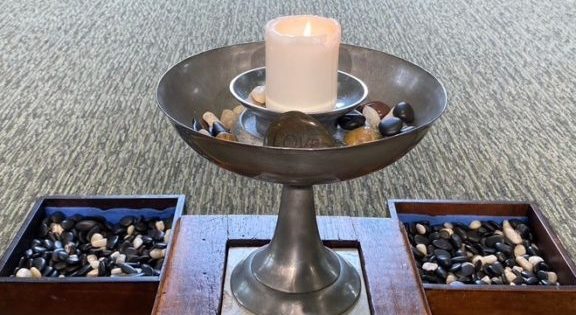
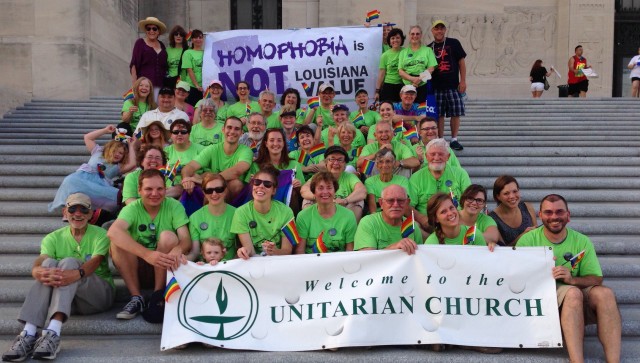
From its beginning, the Baton Rouge Unitarian Church has been involved in and identified with contemporary social issues. The group’s inter-racial membership and its so-called "radical views" were the reason for its ouster from its first long-term meeting place. In the 1950s, Baton Rouge Unitarians marched in the picket lines at the State Legislature to keep public schools open, while in the 1960s, members joined Freedom Marches, as well as the Peace Corps. The school desegregation strife of the 1970s and 1980s engaged the active involvement of many members, as has voter registration, capital punishment, open-housing, environmental control, women’s rights, abortion rights, gun-control, gay and lesbian rights, any and all issues related to human rights and human dignity. In the 1990s, individuals and groups have been involved in activities related to the alleviation of racism, illiteracy, teenage pregnancy, and other issues. The tragic killing of Yoshi Hattori, a Japanese exchange student, in 1994 and the ensuing push for gun-control legislation spearheaded by his host family and supported by many members of the congregation resulted in worldwide exposure for the Unitarian Church of Baton Rouge. The dedication of Peace Stones on the church grounds in 1996 in memory of Yoshi symbolizes the Church’s ongoing quest for peace and justice for all peoples.

A major factor in the growth and vitality of the Baton Rouge UU Church has been strong leadership by its members and the involvement and participation of the membership at all levels of church life, from its founding and throughout the ensuing decades. Each administration has added an important chapter to the evolving history of the Church, whether at its chartering, building of the first church, guiding the processes that led to the decision to call the first minister, effecting the transition from fellowship to church, retiring the first mortgage, launching the first capital drive, building a new sanctuary, or, in less dramatic times, providing creative, visionary leadership. As the membership has grown over time, leadership from the ranks of newer members has provided fresh insights and new experiences, while the ongoing involvement of long-time members has provided stability and continuity through periods of change.

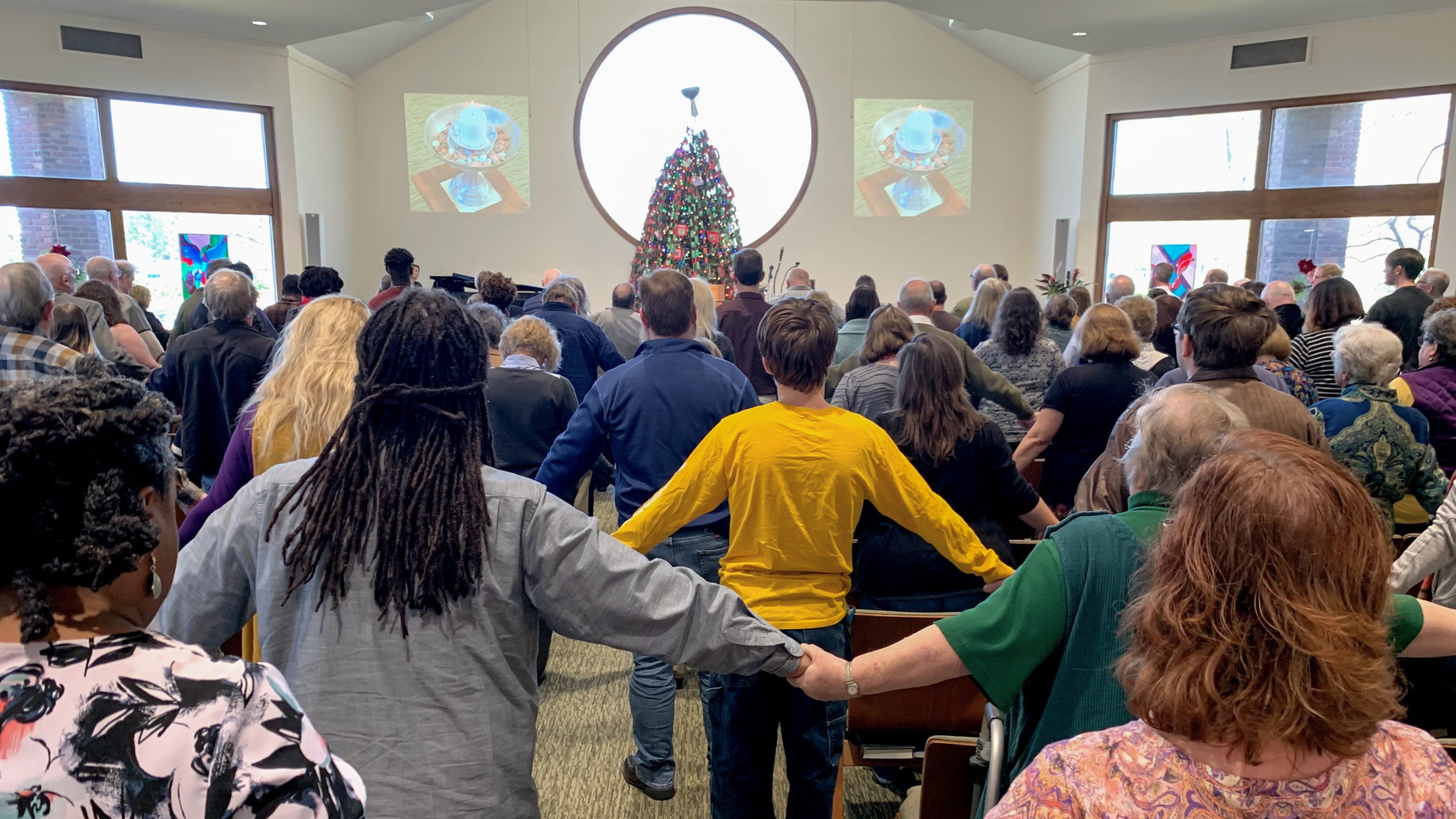
The Baton Rouge Unitarian Church has evolved from a small close-knit fellowship to a cosmopolitan church comprised of a diverse, intergenerational membership. It has, nevertheless, retained a welcoming spirit and openness to new ideas and new directions, and a wide vision, aptly symbolized in the expansive new sanctuary with its large round window opening to a beckoning world. With its rich resources of a vibrant membership and a strong and visionary lay and ministerial leadership, the Unitarian Church of Baton Rouge moves toward the twenty-first century as a continuously growing and unfolding religious community, as envisioned by the small nomadic group who years ago laid the foundation for liberal religion in Baton Rouge.

Becky Cureau, Historian